



Chien Thang ready-mixed concrete manufacturing plant.
The synchronized implementation of technical standards and regulations at six enterprises in Gia Lai province not only helps improve production efficiency but also gradually enhances the reliability, competitiveness, and market readiness of products. This is a practical step in the standardization and sustainable development of local enterprises.
Technical standards and regulations play a crucial role in ensuring product quality, consumer safety, and legal compliance in production and business activities. Standards are technical requirements voluntarily adopted by businesses to control the quality of products or services, while technical regulations are mandatory regulations issued by state agencies to ensure safety, hygiene, environmental protection, or public health. For small and medium-sized enterprises – especially in sectors such as food, chemicals, fertilizers, or construction materials – developing and applying standards and regulations increases transparency, creates a competitive advantage, and is a necessary condition for products to legally circulate in the market. This also forms a solid foundation for businesses to access higher-quality certifications and develop in a professional and systematic manner.
With the goal of supporting local businesses in gradually improving productivity, quality, and market integration capabilities, the Gia Lai Provincial Department of Science and Technology has implemented a provincial-level science and technology project: “Building a pilot model for improving productivity and quality based on the application of productivity improvement systems, standards, tools, and scientific, technological, and innovative solutions for businesses in Gia Lai province,” led by STI Vietnam Co., Ltd. The project includes a pilot program supporting the application of technical standards and regulations at six businesses operating in the fields of agriculture, food, chemicals, and construction materials. Each participating unit received thorough surveys, systematic consultations, and practical training to ensure that the standardization process is consistent with actual conditions and current legal requirements.
Standardization in the construction materials sector: the foundation for consistent quality and long-term development.
In the construction materials manufacturing sector, two companies, Tong Tam Gia Lai Co., Ltd. (tunnel-fired bricks) and Chien Thang Joint Stock Company (ready-mix concrete production), received support in applying technical standards to improve their quality management capabilities. Specifically, Chien Thang Joint Stock Company received consultancy on applying ISO 9001:2015, establishing processes for controlling raw materials, mix design, testing, and storing concrete product samples. The standardized management system helps the company ensure consistent product quality, meeting the stringent technical requirements of the construction market and large-scale infrastructure projects. Meanwhile, Tong Tam Company initially received guidance on developing a quality control process for its fired bricks, laying the foundation for issuing its own standards and eventually implementing a comprehensive quality assurance system in the future.

Food and agricultural products: standardization for wider reach and increased product value.
For food and agricultural product manufacturers, adopting standards is not only a legal requirement but also a key factor in enhancing reputation and expanding markets. Two exemplary units that received support are An Nhien Agricultural and Service Cooperative (fermented banana juice) and Agri Food Co., Ltd. (red artichoke powder). Agri Food was guided in developing and issuing its own internal standard (TCCS) 01:2025/AGRIFOOD, standardizing the entire production process from raw materials to finished products, completing the conformity declaration dossier, and selecting a suitable certification body. The company also implemented quality awareness training for its staff, improved testing procedures, and conducted internal assessments, laying the groundwork for future international certifications such as ISO 22000 or HACCP.
In addition, An Nhien Cooperative – a unit specializing in preliminary processing and processing of agricultural products in Kong Chro district – also received advice on the process of declaring product standards, training on food safety, and gradually building an internal control system. Standardization helps the cooperative improve its traceability and better meet the requirements when participating in the clean agricultural supply chain.

Chemical and Fertilizer Industry: Strengthening Legal Framework, Safety Control, and Elevating Brand Image
Among the chemical and fertilizer manufacturing businesses, Vietnam Enzyme Biotechnology Co., Ltd. and Phu Loi Organic Cooperative were selected as pilot projects. For their dishwashing liquid product, Vietnam Enzyme Biotechnology Co., Ltd. received support in developing its internal quality control standards (TCCS) based on TCVN 6971:2001 and relevant legal regulations on chemicals, food safety, and product labeling. This process included surveying the current situation, providing guidance on testing, establishing quality standards, and issuing internal TCCS publication decisions. This is a crucial foundation for the company to control quality, ensure product transparency, and guarantee legal market circulation.
Meanwhile, Phu Loi Organic Cooperative – a producer of organic fertilizers from agricultural by-products – has received consulting services to establish an ISO 9001:2015 quality management system, update its technical standards to comply with QCVN 01-189:2019/BNNPTNT, and receive guidance on declaring conformity and selecting a certification body. This standardization not only helps the cooperative meet legal requirements but also creates a competitive advantage thanks to the clarity of product quality and origin, opening up opportunities for deeper participation in the ecological agricultural supply chain.

Standardizing standards – a strategic move for local businesses.
The initial success from the six pilot models shows that applying technical standards and regulations is not only suitable for large enterprises, but also entirely feasible for small businesses and cooperatives if there is a clear roadmap and proper consultation. The implementation process in Gia Lai is proof of the effectiveness of combining training, consulting, document standardization, and practical testing, helping businesses gradually develop a mindset for quality management and risk management.
As a consulting firm, STI Vietnam Co., Ltd. has been a partner with businesses throughout the entire process, from surveying and advising on solutions to assisting with legal procedures, building processes, and training personnel. This support model not only helps businesses improve their internal capabilities but also expands their market access, increasing trust with partners and consumers.
In the coming period, the Gia Lai Provincial Department of Science and Technology will continue to expand similar support models, especially focusing on agricultural processing, food, and OCOP products. Standardization according to standards and regulations will be key to the sustainable, professional development of Gia Lai businesses and their deeper integration into regional, national, and international markets.
Related Articles

Capacity building and promoting the Digital and Green Transformation for SME support units in Quang Tri
Continuing the journey of propagating a sustainable productivity ecosystem from previous training courses, an in-depth training course on "Capacity Building...

STI Vietnam co-organizes capacity building for SME support units in Thai Nguyen
On April 16th and 17th, 2026, in Thai Nguyen City, STI Vietnam co-organized the training program "Capacity Building for SME...

STI Vietnam co-organizes in-depth training on the digital and green transformation for SME support units in Hanoi
On April 9th and 10th in Hanoi, STI Vietnam had the continued honor of collaborating with the Agency for Private...

STI Vietnam co-organizes training on the digital and green transformation for SME support units in Hai Phong
On April 2nd and 3rd in Hai Phong, STI Vietnam, in collaboration with the Agency for Private Enterprise and Cooperative...
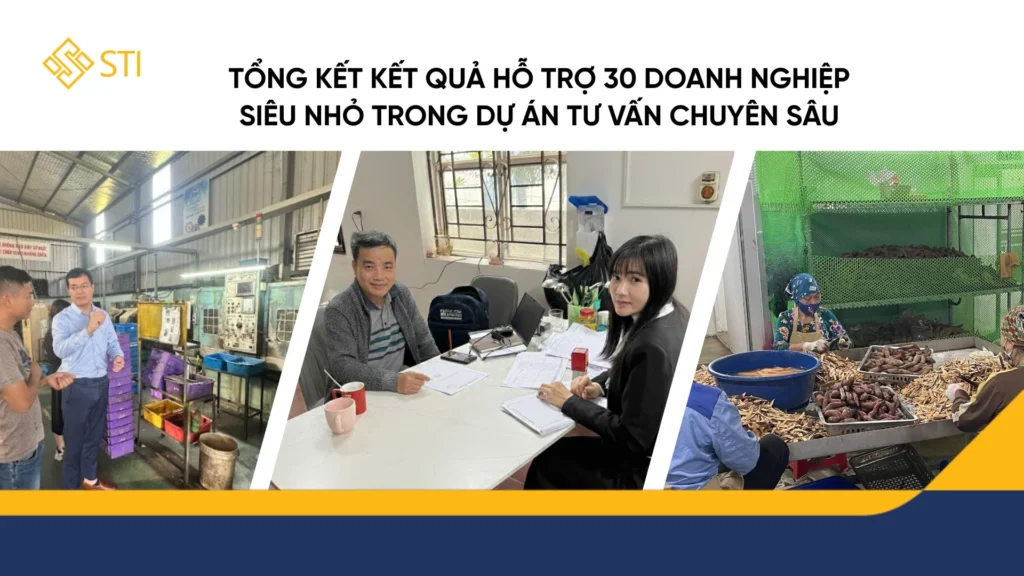
Project Outcomes: In-depth Consultancy Support for 30 Micro-enterprises
In the context where micro-enterprises account for a large proportion of the business community yet face numerous limitations in resources,...
CBAM EU: Crisis or Opportunity? What should Vietnamese businesses do to proactively adapt?
International trade is progressively shifting towards a green trajectory, making the EU Carbon Border Adjustment Mechanism (CBAM) a top concern...