



ISO 45001 – Occupational Safety and Health Management System (OHSMS)
In the context of a rapidly developing global economy and ongoing industrialization, occupational safety and health have become top priorities for businesses. Workplace accidents and diseases not only cause human resource losses but also lead to increased costs, production disruptions, and damage to brand reputation. To meet legal compliance requirements and build a sustainable work environment, ISO 45001 emerged as an international standard, helping businesses establish effective occupational safety and health management systems, protect people, enhance competitiveness, and affirm social responsibility within the global supply chain.
What is ISO 45001?
ISO 45001 is an international standard for occupational health and safety management systems (OHSMS), published in 2018 by the International Organization for Standardization (ISO). It is the first global standard to replace previous regional or national standards such as OHSAS 18001.
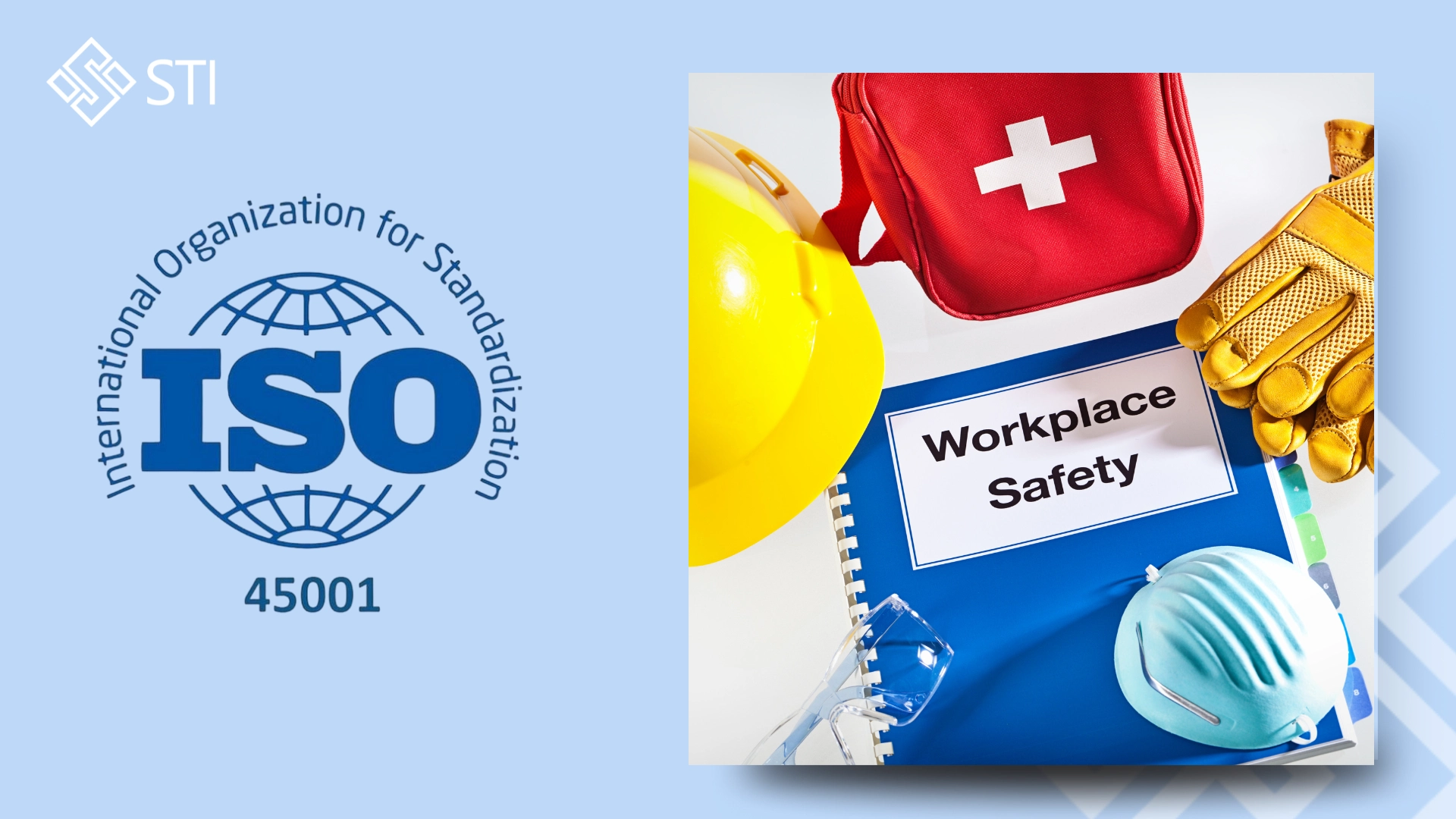
ISO 45001 – Occupational Safety and Health Management System (OHSMS)
This standard sets out requirements to help organizations:
-
Preventing occupational accidents and diseases.
-
Minimize workplace risks.
-
Protecting the physical and mental health of workers.
-
Maintain and continuously improve the safety system.
Why is ISO 45001 important?
Implementing ISO 45001 has strategic and operational implications for all organizations. This standard is important because:
-
Organizational responsibility: Organizations are responsible for the occupational safety and health of their employees and others who may be affected by their activities. This responsibility includes promoting and protecting their physical and mental health.
-
Legal and partner requirements: An occupational safety and health management system can support an organization in fully complying with legal and other requirements. When an organization has decided to comply with other voluntary or mandatory needs and expectations (e.g., customer requirements, industry standards), these need to be addressed when establishing the management system.
-
Risk prevention and management: The purpose and expected outcome of the system is to prevent work-related injuries and illnesses and to provide a safe and healthy workplace. It is crucial for the organization to eliminate hazards and minimize occupational safety and health risks.
-
Market context and global trends: The success of an OHSMS depends on many factors, including consideration of external issues such as the cultural, social, political, legal, financial, technological, economic, natural, and competitive market environment. Compliance with the standard helps the organization demonstrate assurance to workers and other stakeholders that an effective occupational safety and health management system has been established.
Which businesses are suitable for ISO 45001? – Which entities need to pay attention?
ISO 45001 is a flexible standard applicable to organizations of all types and sizes. Businesses should implement it if:
-
Desire to improve occupational safety and health: The organization aims to establish, implement, and maintain an occupational safety and health management system to improve workplace safety and hygiene, eliminate hazards, minimize occupational safety and health risks, and capitalize on occupational safety and health opportunities.
-
Risk-related operational characteristics: The level of detail, complexity, and resources required to ensure the system’s success will depend on the nature of the organization’s activities and the associated occupational safety and health risks.
-
For businesses with a large or diverse workforce: The level of management system required will depend on the organization’s context (e.g., number of employees, size, geography, culture, legal requirements).
-
Businesses need assurance: Organizations want to demonstrate successful implementation of this standard to provide assurance to workers and other stakeholders that an effective and properly established occupational safety and health management system is in place.
Benefits of implementing ISO 45001 – Taking your business to the next level
Establishing an occupational safety and health management system according to ISO 45001 standards not only helps minimize the risk of accidents and occupational diseases but also promotes many strategic benefits that contribute to the sustainable development of businesses. ISO 45001 creates a professional, healthy, and internationally standardized working environment, and can be easily integrated into other management systems such as ISO 9001 and ISO 14001 to improve overall business efficiency.

Benefits of implementing ISO 45001
-
Risk management and safety assurance
ISO 45001 helps businesses proactively identify and eliminate hazards, thereby minimizing accidents and occupational diseases. Thanks to a rigorous management system, the working environment becomes safer and more stable, creating peace of mind for both employees and managers. -
Enhance performance and continuous improvement.
A scientifically designed system not only prevents risks but also improves operational efficiency. Businesses can save on costs arising from incidents, compensation, or production disruptions, while simultaneously taking advantage of opportunities to improve work quality, linked to a process of continuous improvement. -
Meeting legal requirements
ISO 45001 helps businesses strictly comply with domestic occupational safety and health regulations and align with international practices. This not only limits legal risks but also facilitates cooperation, especially with foreign partners who have stringent requirements. -
Building a safety culture within the organization.
A key feature of ISO 45001 is its encouragement of commitment from leadership combined with the participation of all employees. As a result, occupational safety and health are no longer the responsibility of a single department but become an integral part of the corporate culture, linked to social responsibility and sustainable development. -
Enhance brand reputation and image.
ISO 45001 certification is clear evidence of a commitment to a “safe and responsible business.” This enhances trust from customers, partners, investors, and the community, while also helping businesses attract and retain high-quality human resources.
Conclude
ISO 45001 is not simply a technical standard for workplace safety, but also a sustainable development strategy for businesses. Adopting this standard helps organizations protect people, assets, and brand reputation, while creating a competitive advantage in the global supply chain. Furthermore, ISO 45001 affirms the social responsibility of businesses, demonstrating a commitment to a safe, humane, and sustainable working environment. With ISO 45001, businesses not only build a foundation for efficient operations but also enhance their image and market position, opening up opportunities for long-term and stable growth in the era of integration.
Sign up for consultation now
Leave your information to get free consultation about ISO 9001
SA8000 – Corporate Social Responsibility Standard
In the era of globalization, sustainable development is measured not only by revenue or profit, but also by how businesses treat their employees – their most valuable asset. A fair, safe, and humane work environment is key to attracting talent, retaining staff, and building trust with customers and partners. SA 8000 – an international standard for social responsibility – was created to provide a framework to help businesses measure, manage, and certify these commitments.
What is SA 8000? Standard content
SA 8000 (Social Accountability) is a benchmark for comparing and evaluating corporate social responsibility developed by SAI (Social Accountability International), established in 1997. This standard is based on: the International Convention on Human Rights, the Conventions of the International Labour Organization (ILO), children’s rights, and the labor laws of the host country.

9 core requirements of SA 8000
SA 8000 outlines nine core requirements that every organization must adhere to:
- Child labor: No child labor, protection of the rights of minors.
- Forced or compulsory labor: All forms of forced labor are strictly prohibited.
- Health and safety: Ensuring a safe, hygienic, and humane working environment.
- Freedom of association and collective bargaining: Respect for workers’ rights to association, trade unions, and collective bargaining.
- Non-discrimination: Eliminating all forms of discrimination based on gender, religion, ethnicity, political views, etc.
- Discipline and humane treatment: Physical punishment, mental coercion, or harassment are strictly prohibited.
- Working hours: Adhere to legally mandated working hours and ensure adequate rest periods.
- Salaries: Fair and transparent compensation that meets basic living standards.
- Management system: Establish mechanisms for managing, monitoring, and continuously improving the implementation of SA 8000.
Why is SA 8000 important?
Applying for and achieving SA 8000 certification is not just a formal “certificate,” but clear evidence of a company’s commitment to social responsibility. This standard is important because:
- Protecting workers’ rights: The core objective is to empower and protect all workers by setting specific requirements regarding working hours, wages, health and safety, and combating human rights violations such as child labor and forced labor.
- Compliance with laws and international standards: Organizations are required to comply with the labor laws of the host country and international standards such as the ILO Convention, the Universal Declaration of Human Rights, and international treaties on economic, social, and cultural rights.
- Sustainable System Management: The management system element (item 9) is central to the implementation, monitoring, and reinforcement of corrective actions. This enables the organization to achieve sustainable and complete compliance while continuously improving.
- Establishing labor relations: The standard requires establishing, connecting, and maintaining a relationship between employees and management through compliance processes, which is particularly important for identifying and correcting non-compliance issues.
Which businesses are suitable for the SA 8000?
The SA8000 standard has a very broad scope of application, suitable for all types of organizations globally, without limitations on size, geographical location, or industry. This means that any business or organization, from companies, corporations, farms, plantations, cooperatives to non-governmental organizations or even government agencies, can be certified SA8000 if they meet the requirements. This flexibility and global reach have made SA8000 an important benchmark in promoting social responsibility and protecting workers’ rights.
In fact, many Vietnamese businesses have successfully implemented SA8000, demonstrating the effectiveness and practicality of this standard:
- Huu Nghi Food Joint Stock CompanyHuu Nghi FoodProviding a safe and healthy working environment for employees, certified SA8000:2014.
- Factory Elmich VietnamCommitted to adhering to stringent social responsibility standards, achieving SA8000:2014.
- Alpha Networks Vietnam Co., Ltd.: Improving its management system and ensuring compliance with international standards.
These examples demonstrate that applying SA8000 not only enhances reputation and competitiveness but also affirms a company’s commitment to employee rights and social responsibility.
Benefits of implementing SA 8000
Adopting the SA8000 standard not only demonstrates a company’s commitment to social responsibility but also brings practical value to management and sustainable development. The core benefit of applying SA8000 lies in building and maintaining compliance with social responsibility and continuous improvement.

Benefits of implementing SA 8000
- Improving working conditions and benefits: The application of SA8000 leads to the development or improvement of workers’ rights and working conditions.
- Building an effective management system: Standards help organizations establish an effective management system.
- Achieving sustainable compliance: The standard enables organizations to achieve sustainable and full compliance with social responsibility requirements.
- Continuous monitoring and improvement: Through the Management System and the establishment of a Social Responsibility (SPT) Committee, the organization can monitor activities, conduct periodic internal audits, and identify potential actions to enhance the implementation of the Standard.
- Supply chain management: Organizations must conduct detailed investigations into the level of SA8000 compliance of suppliers/subcontractors, private recruitment agencies, and secondary suppliers, thereby mitigating serious supply chain risks.
Conclude
SA8000 is a tool that helps businesses build a foundation for sustainable development. Adopting this standard not only protects the rights of employees but also strengthens trust from partners, customers, and the community. Choosing SA8000 also means choosing a transparent, humane, and long-term path – where human values are placed at the heart of all development strategies.
Sign up for consultation now
Leave your information to get free consultation about ISO 9001
ISO 26000 – Guidelines for implementing corporate social responsibility
In the context of globalization and rapid economic development, many businesses and organizations are facing increasing pressure regarding transparency, business ethics, and responsibility towards the community and the environment. Managing social risks, respecting human rights, and committing to sustainable development are no longer options but essential requirements for maintaining reputation and competitive advantage. In this trend, ISO 26000 emerged as a guiding standard, helping businesses understand, assess, and integrate social responsibility into their strategies and daily operations, while also orienting them towards long-term sustainable development.
What is ISO 26000?
ISO 26000 is a guideline standard on Corporate Social Responsibility (CSR) issued by the International Organization for Standardization (ISO) as ISO 26000:2010 in 2010. ISO 26000 is a guideline standard, not a management standard for certification, and therefore should not be used as a basis for official certification. Any claim of being “ISO 26000 certified” is a misuse of the standard.

7 core themes of ISO 26000
7 core themes of ISO 26000
This standard focuses on seven key themes, helping organizations to view social responsibility comprehensively:
- Organizational management
- Human rights
- Labor practices
- Environment
- Fair operating practices
- Consumer issues
- Community engagement and social development
Implementing these themes in a coordinated manner helps businesses both enhance their brand image and make practical contributions to the community and the environment.
Why is ISO 26000 important?
ISO 26000 is significant because it affirms that a socially responsible organization is a key factor contributing to sustainable development. In the context of globalization, rapid communication, and increasing economic and financial interdependence, social responsibility has become a crucial criterion for assessing an organization’s overall competence and ability to maintain long-term effectiveness. Simultaneously, the urgent need to ensure a healthy ecosystem, social justice, and transparent governance makes social responsibility no longer an option, but a necessity.
The core characteristics of social responsibility according to ISO 26000:
- Voluntariness and going beyond legal compliance: Social responsibility goes beyond simply adhering to legal regulations – which is the fundamental basis – and also demonstrates an organization’s commitment to integrating ethical values and social and environmental considerations into its decision-making process.
- Accountability and transparency: Organizations must be accountable for their impacts on society, the economy, and the environment; and must disclose accurate, timely, and truthful information about relevant decisions and activities.
- Proactive assessment: Organizations need to proactively take measures to identify, prevent, and mitigate actual or potential negative impacts of their activities and decisions on society, the environment, and the economy.

Three characteristics of ISO 26000
Which businesses are suitable for ISO 26000?
The ISO 26000 social responsibility standard is designed to apply to all types of organizations, regardless of sector, size, or location. This means that ISO 26000 is not only suitable for large corporations but also offers many practical benefits for small and medium-sized enterprises as well as non-profit organizations.
- Applicable areas: Private enterprises, government agencies, non-profit organizations.
- Scale: Suitable for both large enterprises and small and medium-sized enterprises (SMEs).
ISO 26000 is particularly useful for small and medium-sized enterprises (SMEs) due to its flexible and cost-effective approach. SMEs can integrate social responsibility through simple, practical, and effective actions, without needing overly complex solutions. The advantages of SMEs include rapid innovation, flexible decision-making, and strong engagement with the local community, making the adoption of this standard even more valuable. - Location: The event can be organized in developed countries, developing countries, or across multiple geographical locations.
Benefits of businesses implementing ISO 26000

What benefits can be achieved when implementing ISO 26000?
Implementing ISO 26000 – the social responsibility standard – brings many practical benefits to businesses, not only in internal management but also in reputation, partnerships, and sustainable development. Specifically:
- Making decisions more transparently: Businesses gain a better understanding of societal expectations, opportunities, and risks associated with social responsibility, and better manage legal risks.
- Improved risk management: Helps organizations predict and control risks effectively, minimizing negative impacts.
- Enhance reputation and trust: Increase confidence from customers, partners, and the community.
- Social licensing support: Facilitating the organization’s social acceptance and support.
- Promoting innovation: Social responsibility encourages creativity, leading to new business solutions.
- Enhancing competitiveness: Improving financial position and becoming a preferred partner.
- Improve relationships with stakeholders: Expand collaboration opportunities and build new relationships.
- Increase employee engagement: Enhance employee loyalty, morale, and participation.
- Ensuring health and safety: Improving working conditions for both men and women.
- Attracting talent: Positively impacts the ability to recruit, retain, and develop employees.
- Cost savings: Increased productivity, efficient resource utilization, energy and water conservation, reduced waste, and utilization of by-products.
- Promoting a fair business environment: Enhancing transparency, healthy competition, and eliminating corruption.
- Protecting consumer rights: Preventing or minimizing potential conflicts related to products and services.
Conclude
ISO 26000 provides a comprehensive framework to help businesses reconcile profitability and social responsibility. Instead of focusing solely on short-term gains, adopting this standard encourages organizations to pursue transparency, fairness, and sustainable development. In a context where consumers and markets increasingly value ethical practices, businesses that integrate ISO 26000 into their strategies will enhance their reputation and build strong relationships with employees, customers, and the community. This is a long-term approach to establishing a strong position, maintaining stable growth, and creating positive impacts on society.
Sign up for consultation now
Leave your information to get free consultation about ISO 9001
ISO 37301 – Compliance management systems
In an increasingly complex legal environment, credibility and transparency are vital factors, making the establishment of an effective compliance management system a prerequisite for sustainable business development. ISO 37301 is a comprehensive solution that helps organizations not only comply with the law but also enhance integrity, credibility, and competitiveness in the market.
What is ISO 37301? An overview of this international compliance management standard.

ISO 37301 – Compliance management systems
ISO 37301 is an international standard for Compliance Management Systems (CMS), published in 2021 by the International Organization for Standardization (ISO). This standard provides requirements and guidance for businesses to establish, maintain, and improve an effective compliance system that can be certified by a third party.
A key feature of ISO 37301 is that the standard was developed based on the PDCA cycle (Plan – Do – Check – Act), which helps businesses continuously improve:
- Plan: Define requirements, risks, and compliance objectives.
- Cause: Implementing policies, procedures, training, and allocating resources.
- Check: Monitoring, measuring, and evaluating the effectiveness of the system.
- Act: Implement improvements, correct deviations, and enhance performance.

PDCA cycle
With this approach, ISO 37301 not only helps businesses meet legal requirements but also lays the foundation for sustainable development, enhancing credibility and building trust with customers, partners, and stakeholders.
Why is ISO 37301 important?
ISO 37301 is not just a compliance standard, but also a foundation for modern governance, especially important in a global context emphasizing transparency, social responsibility, and sustainable development.
Reasons why ISO 37301 is necessary:
- Building a culture of compliance: Making compliance a daily practice throughout the organization, ensuring transparency and fairness.
- Affirming credibility and management capabilities: This serves as international evidence that the business acts ethically and reliably.
- Minimizing legal risks: This provides a basis for demonstrating good faith before regulatory authorities, helping to mitigate penalties in the event of violations.
- Global integration: ISO 37301 is the “passport” for businesses to participate in supply chains and access international partners.
- Management system integration: Easily combined with other standards such as ISO 9001, 14001, 45001…
- Affirming social responsibility: Creating a competitive advantage as customers and partners increasingly prioritize transparent and sustainable businesses.
What types of businesses are ISO 37301 suitable for?
ISO 37301 is designed to be widely applicable and suitable for all types of organizations:

Types of organizations suitable for ISO 37301
- Scale and scope of operations: This standard applies to all organizations, regardless of type, size, and nature of operations.
- Economic sectors: ISO 37301 is suitable for organizations in the public, private, or non-profit sectors.
- Business characteristics: The requirements and guidance in this document are adaptable. Implementation may vary depending on the size and maturity of the compliance management system, the context, nature and complexity of the organization’s operations, and its objectives.
- Large or multinational organizations: This standard is useful for organizations that are part of a larger entity, helping to define the geographical or organizational boundaries to which the compliance management system will apply.
Key benefits of implementing ISO 37301 in an organization
Implementing ISO 37301 brings many practical benefits to businesses in terms of management, performance, and brand image:
- Enhance compliance management capabilities: Effectively control legal obligations and internal regulations.
- Minimize risks and costs: Limit administrative penalties, reputational damage, and expenses resulting from violations.
- Enhanced operational efficiency: Helps organizations respond quickly and address compliance issues systematically.
- Strengthening reputation and brand: Affirming the image of an honest and trustworthy business.
- Increase confidence from stakeholders: Meet the expectations of customers, investors, and employees.
- Gaining a competitive advantage: ISO 37301 certification demonstrates management competence, helping you stand out in bidding and collaborations.
- Promoting sustainable development: Integrating compliance with risk management to optimize resources and achieve long-term growth.
- Third-party verification: ISO 37301 certification provides transparency and legal validity when verification is needed.
Conclude
In an era where transparency and integrity are the measures of business value, ISO 37301 has become an indispensable tool for building a comprehensive compliance management system. Adopting this standard not only helps businesses control risks, enhance reputation and operational efficiency, but also opens up many opportunities for cooperation, investment, and sustainable development. It can be said that ISO 37301 is a solid foundation for businesses to assert their position and maintain a competitive advantage in the global business environment.
Sign up for consultation now
Leave your information to get free consultation about ISO 9001