1. Introduction
In the context of rising energy prices and the increasing importance of sustainable development trends, optimization of energy consumption has become a core element in enterprise operational strategies. The application of effective solutions not only helps reduce operating costs but also contributes to the objective of reducing greenhouse gas (GHG) emissions. Below are five effective methods to support enterprises in optimizing energy use.
2. Five methods for optimizing energy consumption
(1) Use of renewable energy:
Enterprises can install solar power systems to provide green electricity, reduce carbon tax exposure, and lower electricity costs.
(2) Optimization of production processes:
By improving production processes and investing in high-efficiency machinery, enterprises can reduce energy waste.
(3) Improvement of lighting systems:
Use LED lighting to replace traditional fluorescent lamps and design factory facilities to maximize the use of natural light.
(4) Maintenance and upgrading of equipment:
Regular maintenance and timely replacement of machinery help reduce energy consumption.
(5) Raising awareness and training employees:
Encourage employees to apply energy-saving measures during work processes.
3. Practical case: Thang Loi Co., Ltd. (VICO)
As a leading enterprise in the manufacturing and supply of alloy casting products, VICO has implemented energy optimization solutions to reduce GHG emissions and operating costs.
- Installation of a solar power system supplying electricity for lighting equipment, reducing 158.324 tonnes of CO₂e per year.
- Improvement of production systems, reducing 211.099 tonnes of CO₂e per year.
- Estimated total GHG emissions reduction: 369.423 tonnes of CO₂e.
- Electricity savings: 546,000 kWh per year.
Through these measures, VICO has not only reduced electricity costs but has also contributed to environmental protection and sustainable development.
Related Articles

Capacity building and promoting the Digital and Green Transformation for SME support units in Quang Tri

STI Vietnam co-organizes capacity building for SME support units in Thai Nguyen

STI Vietnam co-organizes in-depth training on the digital and green transformation for SME support units in Hanoi

STI Vietnam co-organizes training on the digital and green transformation for SME support units in Hai Phong
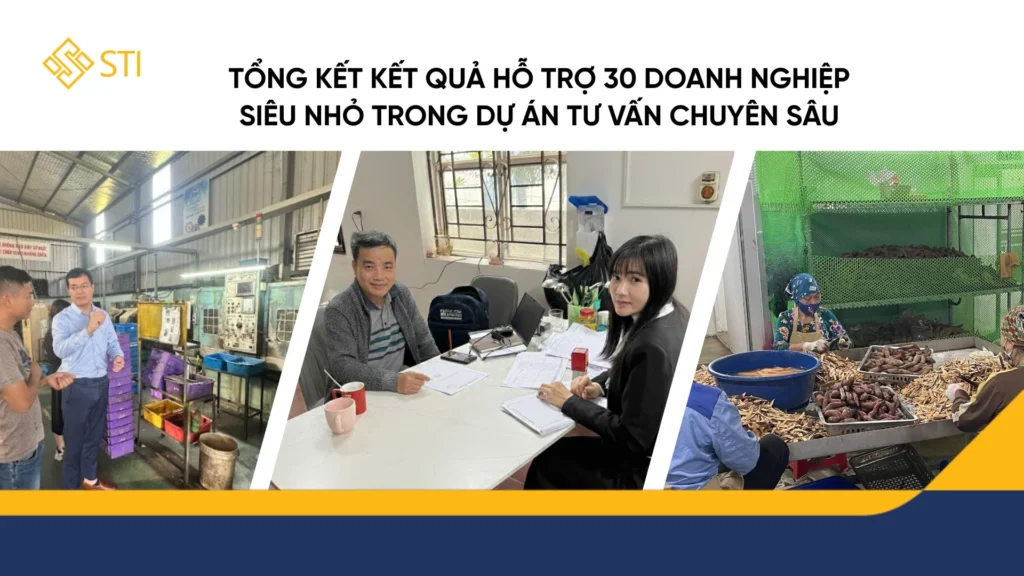
Project Outcomes: In-depth Consultancy Support for 30 Micro-enterprises