The EU Carbon Border Adjustment Mechanism (CBAM) has emerged as a formidable new challenge that Vietnamese steel enterprises must face, impacting their competitiveness directly in the EU market. With financial obligations officially commencing in 2026, the steel industry-one of the sectors most heavily affected-stands at a critical juncture. Delay in adaptation will not only lead to increased costs but also risks a permanent loss of market share to better-prepared competitors.
The EU Market Landscape Post-CBAM Implementation
The EU market has been undergoing rigorous screening since CBAM entered its transitional phase. Beyond legal regulations, the psychology and behavior of EU customers have shifted strictly. By 2026, when importers are required to purchase CBAM certificates, the “rules of the game” will fundamentally change. EU importers are under immense pressure from internal Net Zero regulations. They are compelled to seek suppliers with low emissions to minimize the cost of purchasing additional carbon certificates. EU clients are no longer just buying steel; they are buying “transparency.” Consequently, steel enterprises capable of providing accurate, clear emission data compliant with CBAM reporting standards will be prioritized, even if their product prices are slightly higher than those of non-transparent competitors.
Which Business Groups Are at High Risk?
Vietnam is the second-largest steel exporter to the EU, trailing only ASEAN, making it a critical link in the EU’s supply chain. As CBAM aims for sustainable development, two specific groups of Vietnamese enterprises face significant exposure:
1. Direct Exporters to the EU: This group bears the most direct and severe impact. CBAM certificates are calculated based on the embedded emissions of the goods. Therefore, exporters face immense pressure to report data to EU importers. Transparency, specifically low emission data is the top priority. Without convincing data on the product’s carbon footprint, businesses risk being bypassed for suppliers who can provide clear information and emission reduction certifications. EU importers now demand clear, periodic reduction plans and long-term roadmaps. Furthermore, the complexities of procedures, certification, and verification create legal hurdles and cost burdens, eroding the competitiveness of Vietnamese steel.
2. Processors and Suppliers of Steel Components to the EU: Manufacturers of components, spare parts, or raw steel suppliers for final products destined for the EU are also heavily impacted. Exporters will demand emission data for input materials. These figures directly affect the ability to prove the carbon footprint of the final product, determining whether a client accepts the shipment. If Vietnamese suppliers cannot meet this requirement, EU clients will easily switch to partners capable of providing clear, transparent dossiers. Suppliers must proactively establish emission reduction plans and contingency protocols for data verification. This is essential not only for securing contracts but for maintaining reputation and standing in the global supply chain.
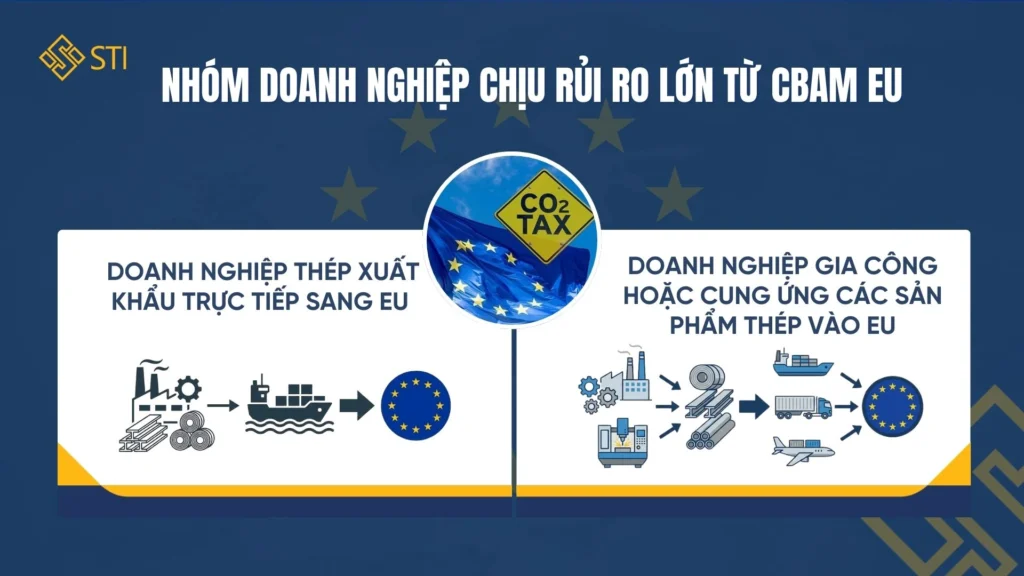 Two key business groups heavily impacted by EU CBAM.
Typical Scenarios for “Losing the Market”
CBAM directly alters how businesses organize production and manage supply chains. Without preparation, losing market share in the EU is inevitable. In reality, two main causes place Vietnamese steel companies at risk:
1. Lost Orders Due to Data Compliance Failure A major risk is the inability to meet requirements for providing production emission data. EU partners are increasingly stringent in verifying supplier emissions. A lack of clear, accurate data results in removal from potential supplier lists. EU clients will shift to competitors who provide full and transparent data, leading to a loss of trust within the international supply chain.
2. Loss of Price Competitiveness Due to High Emissions CBAM directly impacts product costing. Failing to build an emission reduction roadmap leaves products with high carbon intensity, reducing competitiveness against global peers. When CBAM costs are added to the selling price, high-emission Vietnamese steel becomes uncompetitive compared to greener rivals or domestic EU steel. This increases the risk of being squeezed out of the EU supply chain.
 Enterprises at risk of price squeezes and market share loss in the EU.
The “Yellow Light”: Warning Signs of Lagging Behind
CBAM sets increasingly strict requirements. If your enterprise is exhibiting these three signs, the risk of being eliminated from the EU supply chain is critical:
-
Lack of Specialized Personnel: Most Vietnamese steel firms lack a dedicated department for Sustainable Development (ESG) and CBAM. Even large corporations struggle with data tracing and reporting according to EU standards. A lack of expertise leads to reporting errors and non-compliance.
-
Absence of Measurement & Verification (M&V) Systems: CBAM requires specific emission data per ton of product. However, many enterprises only track total factory energy consumption (electricity, coal, gas) without allocating it to specific production lines or batches.
-
Disconnected Information Flow: Meeting CBAM demands requires close cooperation between the exporter and the EU importer. A lack of proactive dialogue regarding data roadmaps or technical requirements puts the enterprise in a passive position, liable to be replaced by more proactive competitors at any moment.
3 Strategic Steps for Vietnamese Steel Enterprises
Facing mounting pressure, Vietnamese steel companies must pivot immediately to retain their competitive edge. Here are three strategic steps to implement during the transition phase:
-
Establish an Internal Focal Point and Clear CBAM Plan: Designate a department or personnel responsible for CBAM, coordinating between Production, Technical, and Export teams. Build a compliance roadmap, assign tasks, set timelines, and prepare for the financial obligation phase starting in 2026.
-
Implement Data Measurement and Recording Immediately: Collecting data on electricity, fuel, and raw material consumption for each production stage is the core requirement of CBAM reporting. Enterprises must standardize data recording processes early to ensure completeness, consistency, and traceability when verified by the EU.
-
Proactive Dialogue with EU Clients: Do not wait to be asked. Discuss emission calculation methods, data formats, and information supply roadmaps with EU partners early. Transparency and early cooperation help maintain customer relationships and reduce the risk of rejection due to technical non-compliance.
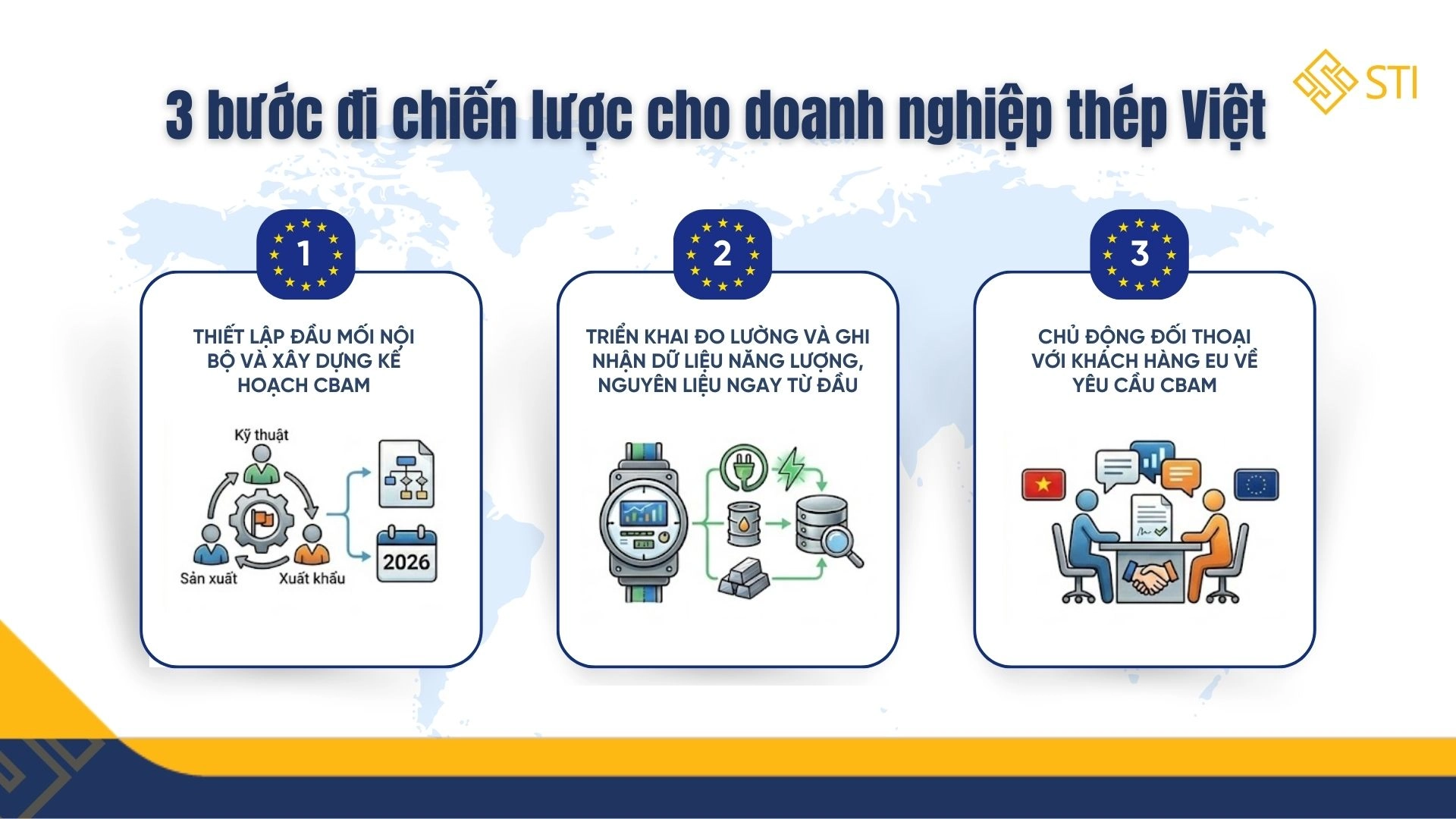 3 strategic steps to implement immediately during the transition phase.
Conclusion
Thorough preparation for CBAM is the key to maintaining and expanding market share, avoiding customer loss, and navigating unwanted trade barriers. Understanding the necessary steps and potential risks allows Vietnamese steel enterprises to be more flexible in their development strategies and secure their long-term competitive position.
Related Articles

Capacity building and promoting the Digital and Green Transformation for SME support units in Quang Tri

STI Vietnam co-organizes capacity building for SME support units in Thai Nguyen

STI Vietnam co-organizes in-depth training on the digital and green transformation for SME support units in Hanoi

STI Vietnam co-organizes training on the digital and green transformation for SME support units in Hai Phong
Project Outcomes: In-depth Consultancy Support for 30 Micro-enterprises