International trade is progressively shifting towards a green trajectory, making the EU Carbon Border Adjustment Mechanism (CBAM) a top concern for many exporters. Since its enactment, CBAM has posed a major challenge: How can businesses retain market share in the EU supply chain as “green” standards become increasingly stringent?
CBAM: Reshaping export competition
CBAM is a technical barrier issued by the EU to prevent “carbon leakage.” Going beyond mere environmental regulations, the EU CBAM is reshaping the international trade order. For nations like Vietnam, where the EU is a key export market, this mechanism is essentially redrawing the map of global export competition.
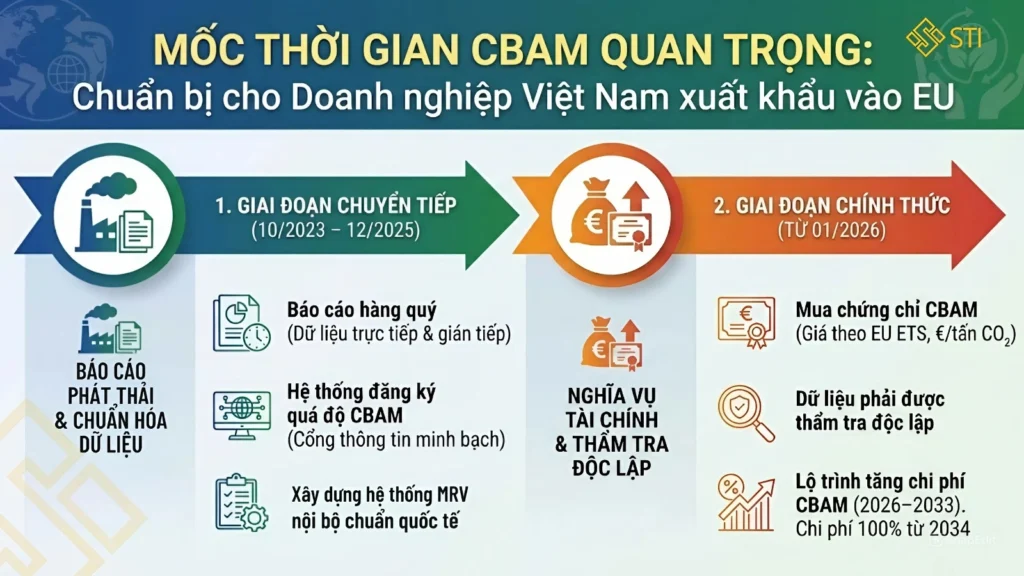
To retain market share, enterprises must pay close attention to the EU CBAM roadmap timelines to avoid being caught off guard:
-
Transitional Phase (October 2023 – End of 2025): This is the “rehearsal” period. Importers must report the emissions embedded in their goods (including both direct and indirect emissions) on a quarterly basis. Although no financial fees are levied yet, reporting errors or missing data will lead to penalties.
-
Full Implementation Phase (From January 1, 2026): The collection of CBAM certificate fees officially begins. The mechanism forces manufacturers to assume financial responsibility for carbon emissions “leaked” during production. At this stage, competitiveness will depend directly on the carbon content of the product; thus, businesses must implement measures to ensure exports fully meet CBAM requirements.
Delaying adaptation to the EU CBAM brings significant risks to exporters:
-
Cost Burden: If a product’s emission levels exceed EU benchmarks, EU clients must purchase CBAM certificates at a higher cost. This escalates product prices, making Vietnamese goods more expensive compared to green-transitioned competitors.
-
Legal Risks: EU CBAM reporting regulations are strict. Non-compliance with declaration procedures or a lack of data transparency can lead to import bans or heavy fines calculated per ton of emissions.
-
Impact on Global Supply Chains: EU clients tend to prioritize suppliers with low emissions to reduce certificate costs. Vietnamese enterprises risk being eliminated from the supply chain if they cannot prove their emission reduction efforts. Once excluded, the opportunity to re-enter the market is incredibly difficult.
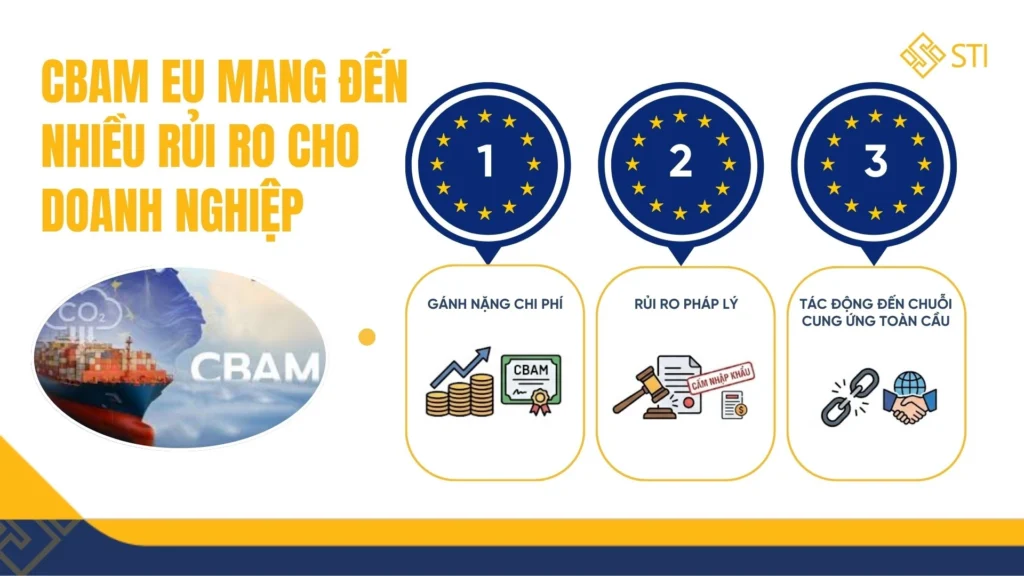 Enterprises facing difficulties when delaying CBAM implementation.
What Should SMEs Do?
With limited resources, Small and Medium Enterprises (SMEs) often face more difficulties than large corporations in implementing CBAM compliance processes. However, flexibility is an SME’s advantage. Below is an action roadmap to turn the CBAM challenge into an opportunity:
1. Commit to Declaration and Transparent Reporting Data is the most valuable “asset” in the green era. Exporters need to provide full emission data to EU importers for CBAM declarations and certificate purchases. Therefore, exporters must:
-
Establish a Data System: Start recording detailed energy consumption (electricity, coal, oil, etc.) and raw material inputs for each specific product line.
-
Master Calculation Methods: Understand emission calculation methods according to EU standards. Having an accurate Emission Report ready helps businesses score absolute points with import partners when they request CBAM data.
2. Adopt International Green Standards To move towards green development, Vietnamese exporters should integrate sustainable development certifications to standardize their roadmap and increase supply chain competitiveness. Proactively apply these standard frameworks:
-
GHG Inventory (ISO 14064): Measure the enterprise’s total emissions.
-
Carbon Footprint (ISO 14067): Calculate emissions per product unit. This is the core figure that determines costs when goods cross the European border.
3. Invest in Green Technology and Energy Efficiency This is the fundamental solution to reduce EU CBAM certificate costs in the long term:
-
Energy Transition: Install rooftop solar power and use biomass boilers to replace fossil fuels.
-
Equipment Upgrades: Replace old, power-hungry machinery with high-efficiency production lines, utilizing inverters and LED lighting.
-
Circular Economy: Utilize waste products for re-production to reduce raw material consumption norms.
4. Train Internal Personnel Understanding the EU CBAM should not stop at the leadership level. Enterprises need to train technical, accounting, and import-export staff so they clearly understand the data collection and reporting process, ensuring information consistency and accuracy.
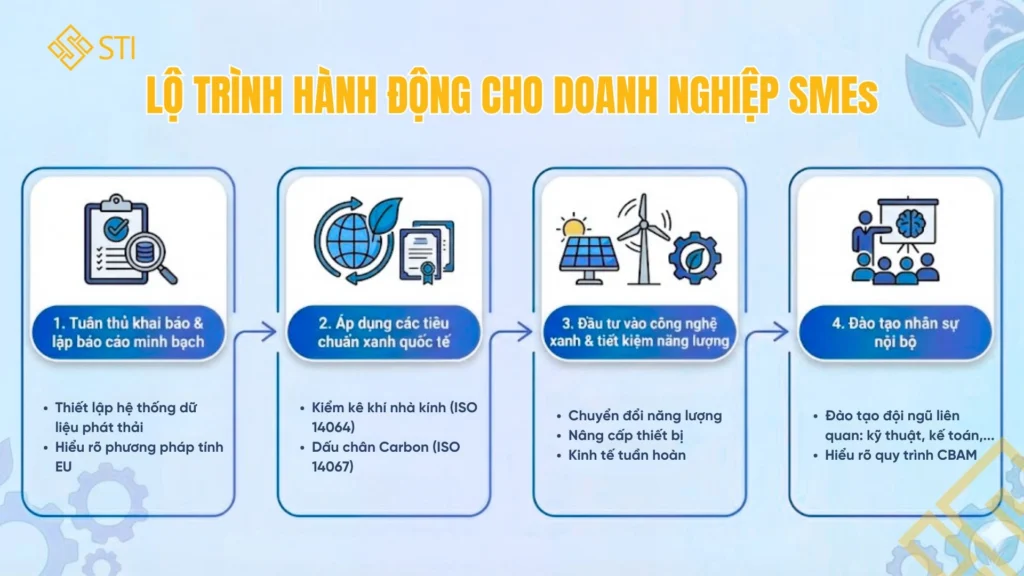 SMEs need to proactively implement CBAM.
Conclusion
The EU CBAM brings many challenges for Vietnamese exporters but also serves as an opportunity to restructure towards sustainable development. By proactively adapting and building a roadmap for data transparency, businesses can transform this “carbon barrier” into an opportunity to expand their market share in the global supply chain.
Is your business struggling with CBAM compliance? Contact STI Vietnam immediately for a tailored roadmap consultation.
Related Articles

Capacity building and promoting the Digital and Green Transformation for SME support units in Quang Tri

STI Vietnam co-organizes capacity building for SME support units in Thai Nguyen

STI Vietnam co-organizes in-depth training on the digital and green transformation for SME support units in Hanoi

STI Vietnam co-organizes training on the digital and green transformation for SME support units in Hai Phong
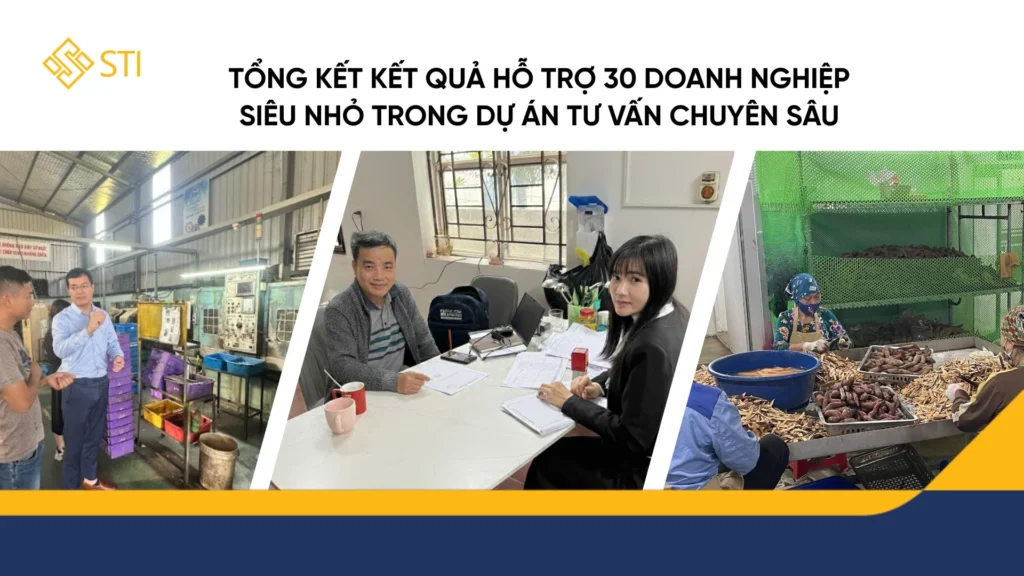
Project Outcomes: In-depth Consultancy Support for 30 Micro-enterprises