
The implementation of the MFCA tool at two production units in Gia Lai province has enabled enterprises to clearly identify points of waste generation in the production process, thereby proposing appropriate improvement measures to optimize costs, conserve resources, and enhance sustainable development.
Within the framework of the provincial science and technology task “Building pilot models to enhance productivity and quality based on the application of systems, standards, productivity improvement tools, and science, technology, and innovation solutions for enterprises in Gia Lai province”, managed by the Gia Lai Department of Science and Technology, STI Viet Nam Co., Ltd. implemented a pilot application of the MFCA (Material Flow Cost Accounting) tool—material flow cost accounting—at two enterprises: Gai Thanh One Member Limited Liability Company and Duc Khang Gia Lai Agriculture and Services Cooperative. These are two entities with specific production models in the fields of agricultural products and biological cosmetics, with development potential but facing challenges in optimizing operating costs.
MFCA – a modern approach to material flow cost management
MFCA is a management tool developed in Japan that enables enterprises to calculate in detail the costs associated with both positive products and negative outputs (material losses, production inefficiencies, waste, and energy consumption). Through mapping material flows and quantifying waste-related costs, MFCA supports organizations in identifying bottlenecks in production systems, thereby providing a basis for process improvement, resource conservation, and increased efficiency in the use of input materials.
For small and medium-sized enterprises—particularly in sectors with intensive use of raw materials and high input costs such as agriculture and biological cosmetics—MFCA is not only a measurement tool but also a management mindset that facilitates the transition toward leaner and more sustainable operating models.
Gai Thanh company: identification of losses in the specialty agricultural production chain
As an enterprise specializing in the production and trading of specialty agricultural products of Gia Lai such as dried bamboo shoots, coffee, pepper, and particularly passion fruit, Gai Thanh One Member Limited Liability Company operates a relatively complex supply chain—from sourcing fresh raw materials, processing, drying, packaging, to storage. However, due to the perishable nature of raw materials and rapid changes in quality, the enterprise frequently faces material losses during pre-processing, drying, and storage stages, leading to increased costs and reduced production efficiency.
Through the MFCA model, experts supported the company in developing material flow diagrams, analyzing loss-generating stages, and identifying specific loss ratios at stages such as cleaning, slicing, drying, and packaging. The results indicated that the volume of rejected or lost passion fruit during pre-processing accounted for a significant proportion, while effective reuse solutions had not yet been implemented. Based on these findings, the company began to study options for reusing by-products such as passion fruit peels and non-conforming pulp, combined with the establishment of stricter input classification processes. MFCA supported the company in developing a comprehensive approach to material flow control, reducing waste, and maximizing value extraction from local agricultural products.
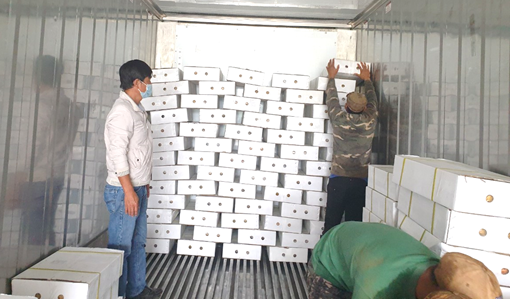
Finished passion fruit products stored in Gai Thanh’s cold storage
Duc Khang cooperative: optimization of biological dishwashing liquid production using local raw materials
In contrast to Gai Thanh, Duc Khang Gia Lai Agriculture and Services Cooperative operates in the production of biological cosmetic products—primarily dishwashing liquids and floor cleaners—using natural ingredients such as fruit peels, fermented liquids, and local essential oils. Although the scale remains limited, the cooperative is developing a production model with a clear orientation toward consumer health protection and local economic development.
During processing, the cooperative encountered difficulties in managing material input norms, controlling product quality, and assessing resource use efficiency. With the MFCA tool, the cooperative was guided to establish material flow diagrams for each product type, from raw material pre-processing, extraction, mixing, filling, to final packaging. This tool enabled the cooperative to identify loss ratios during formulation and packaging stages and to better control the use of water, fermented materials, and additives in each production batch. As a result, the cooperative initiated improvements to semi-automatic filling processes, reducing losses and ensuring more accurate dosing.
In addition, MFCA supported the cooperative in strengthening raw material inventory management and establishing scientifically grounded usage norms, providing a basis for transparent product cost calculation. This is particularly significant for a cooperative oriented toward the development of healthy biological products, as it supports the building of consumer trust through effective quality and cost control.
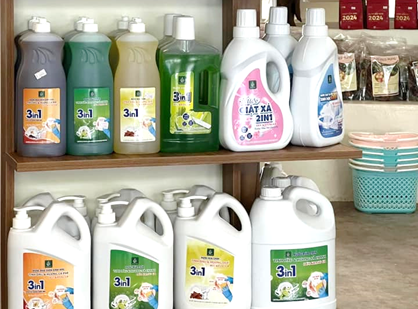
Some of Duc Khang’s key products
Linking cost – efficiency – environment: MFCA is opening a new perspective
From the two pilot models, it can be observed that MFCA delivers not only financial benefits but also contributes to changing how enterprises perceive costs and value. When waste is clearly “defined” through data, enterprises gain concrete motivation to implement improvements, thereby moving closer to green and circular production models, in line with the sustainable development orientation promoted by Gia Lai province.
With technical support from STI Viet Nam Co., Ltd., both entities have established a foundation to continue applying MFCA proactively, on a long-term basis, and in alignment with their actual scale of operations. In the coming period, the Gia Lai Department of Science and Technology will continue to encourage and replicate this model among more enterprises, particularly in sectors with intensive raw material use, in order for Gia Lai to become a region characterized by clean, efficient, and modern agricultural and industrial production.
Related Articles

Capacity building and promoting the Digital and Green Transformation for SME support units in Quang Tri

STI Vietnam co-organizes capacity building for SME support units in Thai Nguyen

STI Vietnam co-organizes in-depth training on the digital and green transformation for SME support units in Hanoi

STI Vietnam co-organizes training on the digital and green transformation for SME support units in Hai Phong
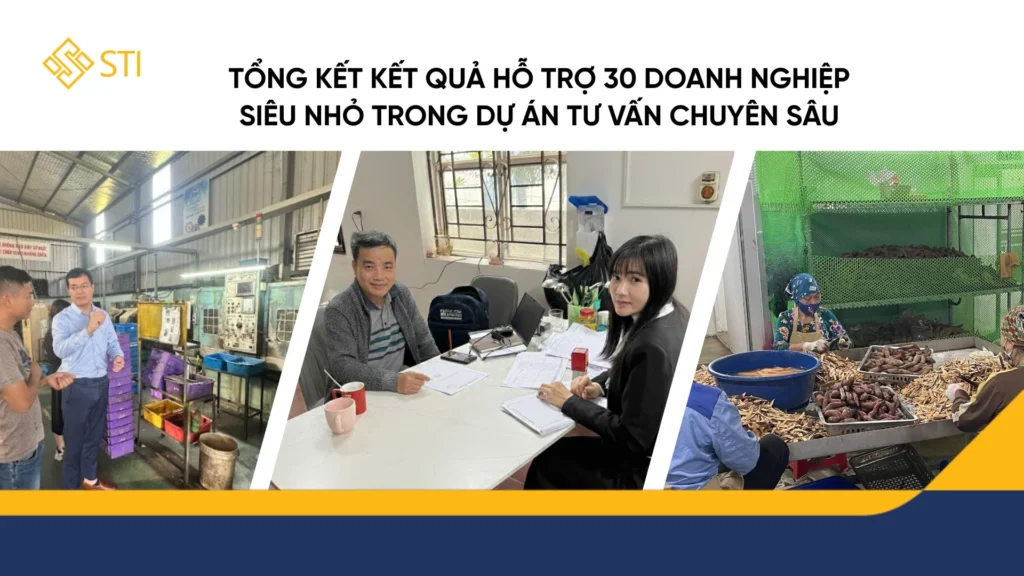
Project Outcomes: In-depth Consultancy Support for 30 Micro-enterprises