



Project expert conducting a survey at Nong Dan Viet Gia Lai Company.
The implementation of the TPI model at two agricultural enterprises in Gia Lai province has initially yielded positive results. Not only does it help standardize production processes and improve the working environment, but TPI also opens up a path towards sustainable development, contributing to enhancing the competitiveness of local businesses.
TPI (Total Productivity Improvement) is an integrated productivity improvement model that combines several advanced management tools such as 5S, TPM (Total Productive Maintenance), ISO 9001, and TWI (Job Training and Instruction). The goal of TPI is to optimize the efficiency of the entire production system, from the work environment, equipment, and processes to human capabilities. Given the characteristics of agricultural businesses, which are often small to medium-sized, manually managed, and have limited resources, applying TPI helps them access modern management thinking in a systematic, structured, and practical way. This is an effective tool for agricultural businesses to transform towards professionalism, better control quality, and sustainably improve productivity.
In the context of agricultural businesses facing increasingly stringent market demands for quality, productivity, and competitiveness, the application of modern management tools plays a crucial role. With the goal of supporting local businesses in accessing advanced improvement methods, the Gia Lai Provincial Department of Science and Technology has implemented a provincial-level science and technology project: “Building a model for improving productivity and quality based on the application of productivity improvement systems, standards, tools, and scientific, technological, and innovative solutions for businesses in Gia Lai province,” led by STI Vietnam Co., Ltd.
As part of the project, the TPI – Total Productivity Improvement model was selected for pilot implementation at two exemplary agricultural enterprises: Gia Lai Viet Farmers Co., Ltd. and Dao Tien Phat Farm Co., Ltd. This is a total productivity improvement model that integrates various tools such as 5S, TPM (Total Productivity Maintenance), ISO 9001:2015, and TWI (Teaching in Industry) to comprehensively improve everything from the working environment and production processes to personnel capabilities and the quality management system.
At Gia Lai Viet Farmers Co., Ltd., a company specializing in processing honey and specialty coffee, the application of TPI has brought about positive changes in both management thinking and production operations. Starting with the 5S (5-Skills) model, the company reorganized its production space, eliminated unnecessary items, and maintained regular cleaning, helping to minimize risks and increase work efficiency. Simultaneously, routine machine maintenance (TPM) was implemented to limit equipment failures and improve the stability of the production process. In particular, standardized training using the TWI (Total Productive Improvement) method contributed to building a more professional workforce. Although still in its initial stages, the change in mindset and commitment to improvement from the leadership have laid a solid foundation for long-term productivity and quality enhancement.

At Dao Tien Phat Farm Co., Ltd., a company specializing in producing Sophora japonica flower tea in Mang Yang district, the TPI model helped the management team clearly identify weaknesses in their operational system. Previously, the company lacked a systematic quality management system, equipment control processes were fragmented, and there was no regular performance monitoring. After participating in the project, the company developed a plan to implement ISO 9001:2015, conducted inventory, assigned equipment codes, controlled maintenance, and reorganized the processing and packaging areas according to the 5S principles. Given the company’s large number of seasonal workers, it also began establishing work instruction documents, laying the foundation for standardized TWI training in the future. More importantly, the implementation of the model helped the management team clearly understand the role of productivity and quality as part of a sustainable development strategy.

The implementation of the TPI model at these two businesses clearly demonstrates that applying improvement tools is not limited to large corporations or industrial manufacturing enterprises, but is perfectly suitable for small and medium-sized enterprises in the agricultural sector – provided they receive the right guidance and expert support. Throughout the implementation process, the consulting team from STI Vietnam Co., Ltd. played a crucial role in surveying, analyzing the current situation, and proposing solutions tailored to the specific characteristics of each business. A flexible, practical approach with a clear roadmap was key to the success of these pilot models.
With positive initial results, the Gia Lai Provincial Department of Science and Technology is continuing to research and expand the implementation of the TPI model to other businesses in the area. The application of modern improvement tools and the standardization of management systems will be key to helping local businesses enhance their competitiveness, develop professionally and sustainably, and participate more deeply in the global agricultural value chain.
Related Articles
Roadmap for preparing data for CBAM reporting: what exporting enterprises need to do?
In the context of the EU tightening “green” standards, the CBAM report has become a “carbon pass” for goods exported...

Moving toward green exports: Checklist that Vietnamese SMEs need to be aware of before January 2026?
CBAM – the carbon border adjustment mechanism is becoming a primary concern for enterprises exporting to the EU. In particular,...
CBAM and six high-emission product groups: what impacts do Vietnamese enterprises in the EU supply chain face?
The carbon border adjustment mechanism (CBAM) of the European Union (EU) officially entered the transitional phase from October 2023. This...
STI accompanies TASA Group to achieve CE certification
In the realm of international commerce, few certifications possess the pervasive significance of the CE Marking. Often likened to a...

3 common mistakes that cause construction materials businesses to fail CE certification
CE certification has long been regarded as a “passport” for construction material products to access the European market. This is...
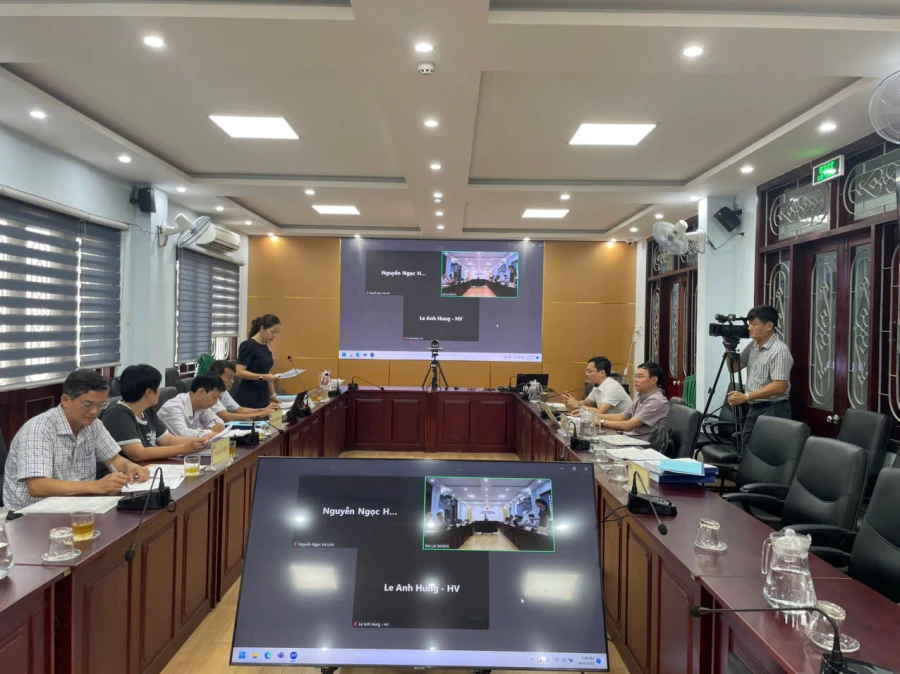
STI successfully accepted the project to build a model to improve productivity and quality for Gia Lai enterprises.
On the afternoon of August 26th, STI Vietnam Co., Ltd. collaborated with the Gia Lai Provincial Department of Science and...