
1. Digital transformation trends in the manufacturing sector
Digital transformation is becoming an inevitable trend in the manufacturing sector, enabling enterprises to optimize processes, improve productivity, and reduce operating costs. Technologies such as enterprise resource planning (ERP) systems, production automation, the Internet of Things (IoT), and artificial intelligence (AI) are increasingly being applied to enhance production efficiency and management effectiveness.
For manufacturing enterprises, digital transformation is not only the application of technology but also a process of changing mindset and operational approaches in order to enhance competitiveness.
2. Initial steps that enterprises can undertake
To initiate digital transformation, enterprises may undertake the following steps:
- Assess the current situation: Identify existing issues in production processes, data management, and enterprise operations.
- Develop a strategic plan: Define specific objectives for digital transformation, identify appropriate technologies, and establish an implementation roadmap.
- Apply management systems: Implement production management software and ERP systems to synchronize data and optimize inventory, finance, and supply chain management.
- Integrate digital technologies into production: Apply automation and IoT technologies to improve equipment performance and achieve energy savings.
- Train personnel: Enhance digital skills for employees to adapt to new working processes.
3. Practical case: JAT company with an energy consumption reduction strategy
JAT joint stock company for automotive parts manufacturing and industrial equipment is one of the pioneering enterprises in the automotive parts and industrial equipment manufacturing sector in Viet Nam. With more than 15 years of operation, JAT has continuously improved its technology and production processes to enhance operational efficiency.
Recognizing the importance of digital transformation and energy consumption optimization, JAT has implemented greenhouse gas emission reduction solutions, including:
- Installation of a solar energy system to supply lighting energy for workshops.
- Design of workshops to utilize natural lighting, reducing daytime electricity demand.
- Replacement of gas stoves with electric stoves to reduce fossil fuel consumption.
As a result of these measures, JAT has set a target to reduce total greenhouse gas emissions by 5% by 2025 (equivalent to approximately 45 tonnes of CO₂e) and to save 64,896 kWh of electricity annually compared with 2023.
4. Conclusion
Digital transformation is a long-term journey; however, starting with fundamental steps such as the application of digital management systems, energy optimization, and capacity building for human resources will enable enterprises to progress further in sustainable development. JAT company represents a typical example of leveraging digital transformation to optimize manufacturing operations and reduce environmental impacts, thereby opening new directions for enterprises in the manufacturing industry in Viet Nam.
Related Articles

Capacity building and promoting the Digital and Green Transformation for SME support units in Quang Tri

STI Vietnam co-organizes capacity building for SME support units in Thai Nguyen

STI Vietnam co-organizes in-depth training on the digital and green transformation for SME support units in Hanoi

STI Vietnam co-organizes training on the digital and green transformation for SME support units in Hai Phong
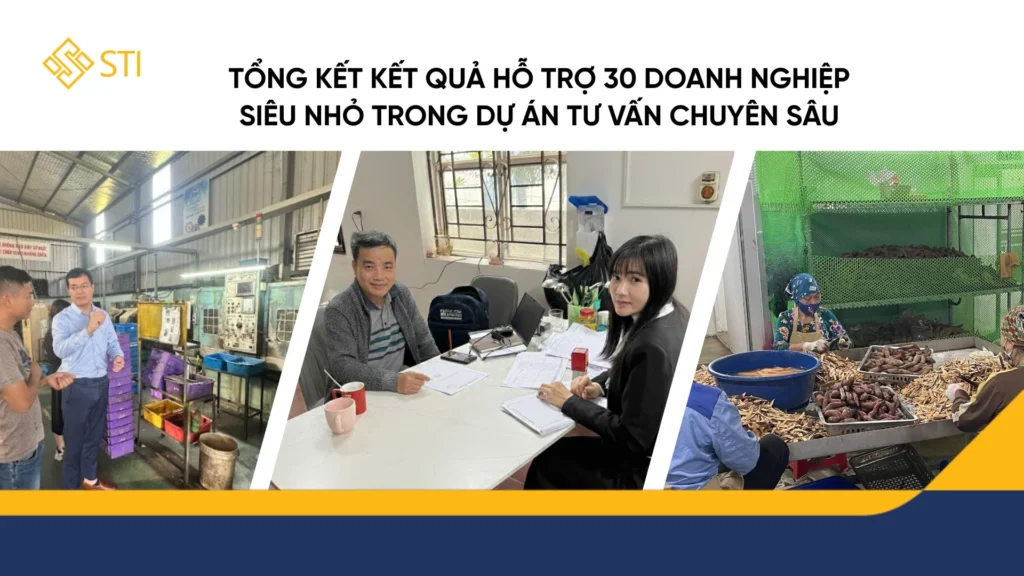
Project Outcomes: In-depth Consultancy Support for 30 Micro-enterprises