
Challenges in operational optimization and sustainable development
In an increasingly competitive environment, manufacturing enterprises are under pressure to optimize operations, save energy, and reduce greenhouse gas (GHG) emissions. However, not all enterprises have sufficient resources or appropriate strategies to implement these improvements effectively. Some common challenges include:
- Lack of systems to monitor and assess energy consumption and GHG emissions.
- Production processes still heavily reliant on manual methods, resulting in high energy consumption.
- Limited use of technology to optimize operations and reduce emissions.
- Absence of a clear and industry-specific sustainable development strategy.
Solutions for production optimization and emission reduction
Several common approaches can help enterprises improve production efficiency and move toward sustainable development:
- Applying Lean Manufacturing to eliminate waste and optimize production processes.
- Deploying energy-efficient technologies such as high-efficiency lighting systems and renewable energy solutions.
- Developing a sustainable development strategy with GHG reduction initiatives and internal performance tracking.
- Seeking specialized consultancy support to identify improvement roadmaps aligned with the enterprise’s operating model.
Practical case – Thai Nguyen Forging Co., Ltd.
As a mechanical processing enterprise specializing in motorcycle parts manufacturing, Thai Nguyen Forging Co., Ltd. has proactively developed initiatives to reduce GHG emissions in its production activities.
In 2024, the company set a target to reduce GHG emissions by 5% by 2025 compared to 2023 levels, equivalent to approximately 15 tonnes of CO₂e. To achieve this goal, the company implemented the following solutions:
- Maximizing the use of natural light and installing solar energy systems to reduce grid electricity consumption.
- Reducing fuel consumption in transportation operations through regular vehicle maintenance and fuel-efficient driving training.
These initiatives enable the company to monitor energy consumption and GHG emissions, laying the foundation for future performance evaluation. This represents an important first step for the enterprise to advance further in its sustainable development strategy.
Conclusion
Optimizing operations and reducing emissions not only help enterprises cut costs but also enhance competitiveness and meet increasingly stringent sustainability requirements. Initial steps such as monitoring and developing clear improvement roadmaps are essential for moving toward a greener production model.
Related Articles

Capacity building and promoting the Digital and Green Transformation for SME support units in Quang Tri

STI Vietnam co-organizes capacity building for SME support units in Thai Nguyen

STI Vietnam co-organizes in-depth training on the digital and green transformation for SME support units in Hanoi

STI Vietnam co-organizes training on the digital and green transformation for SME support units in Hai Phong
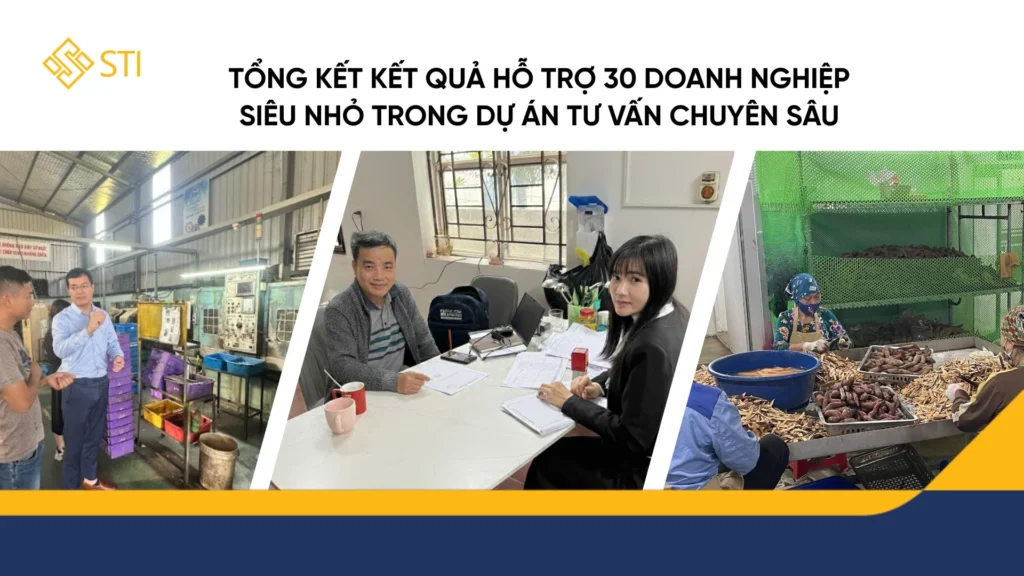
Project Outcomes: In-depth Consultancy Support for 30 Micro-enterprises