



ISO 45001 – Occupational Safety and Health Management System (OHSMS)
In the context of a rapidly developing global economy and ongoing industrialization, occupational safety and health have become top priorities for businesses. Workplace accidents and diseases not only cause human resource losses but also lead to increased costs, production disruptions, and damage to brand reputation. To meet legal compliance requirements and build a sustainable work environment, ISO 45001 emerged as an international standard, helping businesses establish effective occupational safety and health management systems, protect people, enhance competitiveness, and affirm social responsibility within the global supply chain.
What is ISO 45001?
ISO 45001 is an international standard for occupational health and safety management systems (OHSMS), published in 2018 by the International Organization for Standardization (ISO). It is the first global standard to replace previous regional or national standards such as OHSAS 18001.
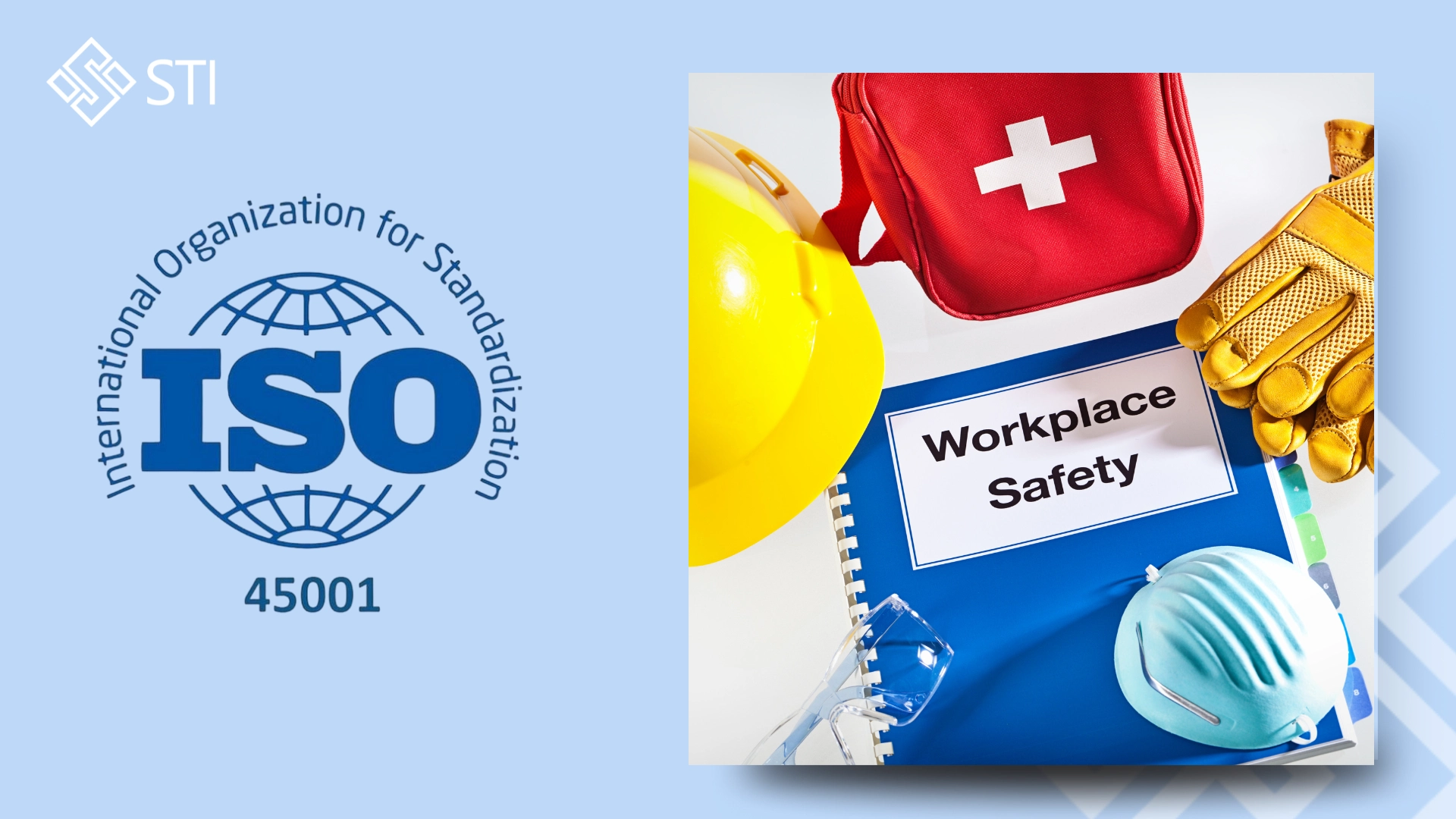
ISO 45001 – Occupational Safety and Health Management System (OHSMS)
This standard sets out requirements to help organizations:
-
Preventing occupational accidents and diseases.
-
Minimize workplace risks.
-
Protecting the physical and mental health of workers.
-
Maintain and continuously improve the safety system.
Why is ISO 45001 important?
Implementing ISO 45001 has strategic and operational implications for all organizations. This standard is important because:
-
Organizational responsibility: Organizations are responsible for the occupational safety and health of their employees and others who may be affected by their activities. This responsibility includes promoting and protecting their physical and mental health.
-
Legal and partner requirements: An occupational safety and health management system can support an organization in fully complying with legal and other requirements. When an organization has decided to comply with other voluntary or mandatory needs and expectations (e.g., customer requirements, industry standards), these need to be addressed when establishing the management system.
-
Risk prevention and management: The purpose and expected outcome of the system is to prevent work-related injuries and illnesses and to provide a safe and healthy workplace. It is crucial for the organization to eliminate hazards and minimize occupational safety and health risks.
-
Market context and global trends: The success of an OHSMS depends on many factors, including consideration of external issues such as the cultural, social, political, legal, financial, technological, economic, natural, and competitive market environment. Compliance with the standard helps the organization demonstrate assurance to workers and other stakeholders that an effective occupational safety and health management system has been established.
Which businesses are suitable for ISO 45001? – Which entities need to pay attention?
ISO 45001 is a flexible standard applicable to organizations of all types and sizes. Businesses should implement it if:
-
Desire to improve occupational safety and health: The organization aims to establish, implement, and maintain an occupational safety and health management system to improve workplace safety and hygiene, eliminate hazards, minimize occupational safety and health risks, and capitalize on occupational safety and health opportunities.
-
Risk-related operational characteristics: The level of detail, complexity, and resources required to ensure the system’s success will depend on the nature of the organization’s activities and the associated occupational safety and health risks.
-
For businesses with a large or diverse workforce: The level of management system required will depend on the organization’s context (e.g., number of employees, size, geography, culture, legal requirements).
-
Businesses need assurance: Organizations want to demonstrate successful implementation of this standard to provide assurance to workers and other stakeholders that an effective and properly established occupational safety and health management system is in place.
Benefits of implementing ISO 45001 – Taking your business to the next level
Establishing an occupational safety and health management system according to ISO 45001 standards not only helps minimize the risk of accidents and occupational diseases but also promotes many strategic benefits that contribute to the sustainable development of businesses. ISO 45001 creates a professional, healthy, and internationally standardized working environment, and can be easily integrated into other management systems such as ISO 9001 and ISO 14001 to improve overall business efficiency.

Benefits of implementing ISO 45001
-
Risk management and safety assurance
ISO 45001 helps businesses proactively identify and eliminate hazards, thereby minimizing accidents and occupational diseases. Thanks to a rigorous management system, the working environment becomes safer and more stable, creating peace of mind for both employees and managers. -
Enhance performance and continuous improvement.
A scientifically designed system not only prevents risks but also improves operational efficiency. Businesses can save on costs arising from incidents, compensation, or production disruptions, while simultaneously taking advantage of opportunities to improve work quality, linked to a process of continuous improvement. -
Meeting legal requirements
ISO 45001 helps businesses strictly comply with domestic occupational safety and health regulations and align with international practices. This not only limits legal risks but also facilitates cooperation, especially with foreign partners who have stringent requirements. -
Building a safety culture within the organization.
A key feature of ISO 45001 is its encouragement of commitment from leadership combined with the participation of all employees. As a result, occupational safety and health are no longer the responsibility of a single department but become an integral part of the corporate culture, linked to social responsibility and sustainable development. -
Enhance brand reputation and image.
ISO 45001 certification is clear evidence of a commitment to a “safe and responsible business.” This enhances trust from customers, partners, investors, and the community, while also helping businesses attract and retain high-quality human resources.
Conclude
ISO 45001 is not simply a technical standard for workplace safety, but also a sustainable development strategy for businesses. Adopting this standard helps organizations protect people, assets, and brand reputation, while creating a competitive advantage in the global supply chain. Furthermore, ISO 45001 affirms the social responsibility of businesses, demonstrating a commitment to a safe, humane, and sustainable working environment. With ISO 45001, businesses not only build a foundation for efficient operations but also enhance their image and market position, opening up opportunities for long-term and stable growth in the era of integration.