



The Prime Minister affirmed that Vietnam is implementing strong measures to achieve net-zero emissions by 2050.
ISO 14064: Systems for measuring and controlling greenhouse gas emissions
Climate change has made greenhouse gas (GHG) emissions a pressing global issue. Vietnam has committed to Net Zero by 2050, requiring businesses to measure, control, and reduce emissions. In this context, ISO 14064 – an international standard for greenhouse gas management – is considered a crucial tool to help businesses achieve data transparency, meet legal requirements, and enhance their reputation in the market.
What is ISO 14064?
ISO 14064 is an international standard issued by the International Organization for Standardization (ISO) that provides a framework for quantifying, monitoring, reporting, and verifying greenhouse gas (GHG) emissions. This standard was first published in 2006 and updated in 2018 to better reflect global trends in emissions reduction.
ISO 14064
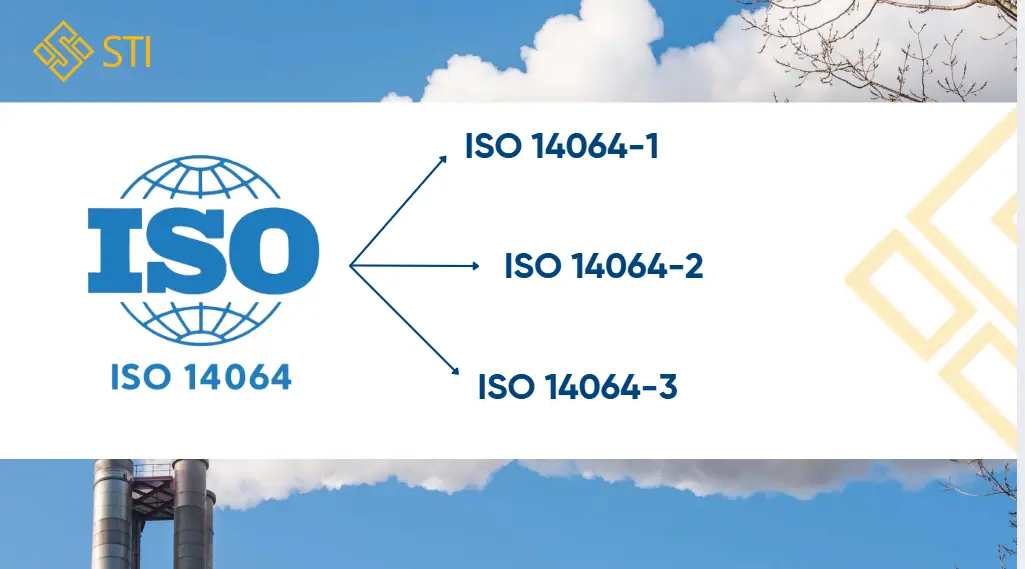
ISO 14064 is divided into three main parts:
- ISO 14064-1: Sets out the principles and requirements for the design, development, and management of greenhouse gas emissions at the organizational level. Businesses apply this part to quantify and report greenhouse gas emissions and their removal activities.
- ISO 14064-2: Sets out principles, requirements and provides guidance at the project level for quantifying, monitoring and reporting activities aimed at reducing emissions or enhancing the removal of greenhouse gases. It includes requirements for greenhouse gas project planning, identification and selection of sources, reservoirs and storage facilities for greenhouse gases relevant to the project and base scenario, monitoring, quantifying, documenting and reporting of greenhouse gas project implementation and data quality management.
- ISO 14064-3: Sets out the principles, requirements and provides guidance for those who conduct or manage the validation or verification of claims on greenhouse gases. It can be applied to the quantification of greenhouse gas organizations or projects, including the quantification, monitoring and reporting of greenhouse gases carried out in accordance with ISO 14064-1:2018 or ISO 14064-2:2018.
Implementing ISO 14064 provides businesses with a scientific basis for accurately assessing emission levels, thereby enabling them to develop mitigation plans and demonstrate their commitment to the community.
Why is ISO 14064 important?
The importance of ISO 14064 stems from several factors, including policy, market, and sustainable development strategies.
First, at the national level, Vietnam has joined the Paris Agreement and committed at COP26 to achieving net emissions of zero by 2050. This means that every industry and every business must have solutions to reduce emissions. ISO 14064 has become a standardization tool, helping businesses meet legal policies as well as government guidelines.

From a market perspective, more and more multinational corporations are requiring suppliers to report emissions transparently. If Vietnamese businesses do not promptly adopt ISO 14064, the risk of being excluded from the supply chain is very high. This standard is not only a “passport” but also a way to affirm credibility in the international market.
Furthermore, measuring and managing emissions helps businesses identify opportunities for energy savings, technological improvements, and operational optimization. This not only benefits the environment but also directly reduces costs and increases profits.
Finally, in the global trend towards carbon markets, businesses can participate in carbon credit trading if they have transparent data verified according to ISO 14064 standards. This represents a new source of economic benefit, opening up avenues for long-term sustainable development.
Which businesses need to conduct greenhouse gas inventories?
Essentially, the ISO 14064 International Standard is voluntary. There are no provisions in the standard that compel organizations to implement or establish a Greenhouse Gas Verification and Calculation Management System. However, in practice, some businesses may consider adopting this standard.

In Vietnam, on January 18, 2022, the Prime Minister issued Decision No. 01/2022/QD-TTg on the List of sectors and facilities emitting greenhouse gases that must conduct greenhouse gas inventories. Accordingly, more than 1000 businesses falling under the scope of this Decision are required to conduct greenhouse gas inventories. These businesses belong to six sectors: Energy; Transportation; Construction; Industrial processes; Agriculture, forestry and land use; and Waste.
| Field | Branch |
| Domestic and commercial energy production |
|
| Transportation |
|
| Industrial production |
|
| Agriculture, forestry and land use |
|
| Build |
|
| Waste |
|
In addition to the entities required to conduct greenhouse gas inventories as mentioned above, some businesses may also be required to implement ISO 14064:2018 due to requirements from customers/partners.
Additionally, organizations may voluntarily adopt the ISO 14064 standard because they recognize that greenhouse gas inventories are important to their business operations.
Benefits of implementing ISO 14064
Implementing ISO 14064 brings many practical benefits to businesses, not only in internal operations but also in long-term strategy. Specifically:
- Control and reduce emissions scientifically.
Businesses have a clear data system on the amount of greenhouse gases generated from each activity. This makes it easier to develop effective emission reduction plans, while also saving energy and raw materials. - Cost savings, optimized operations.
Emission source analysis helps businesses identify inefficiencies in their processes. By improving technology or optimizing processes, businesses can not only reduce emissions but also significantly cut operating costs. - Enhance brand reputation and image.
A company that is transparent in its emissions reporting will build trust with customers, partners, and investors. This also demonstrates social responsibility, helping the brand to be highly regarded in the eyes of the community. - Opportunities to participate in the carbon market.
ISO 14064 provides a basis for businesses to have their emission reductions verified, thereby enabling them to participate in carbon credit trading. This presents a new business opportunity, opening up additional revenue streams and affirming a pioneering position. - Comply with international laws and requirements.
With increasingly stringent legal regulations, businesses that adopt ISO 14064 will proactively meet requirements and avoid the risk of penalties. At the same time, it is also a mandatory requirement to participate in global supply chains with demanding markets such as the EU, the US, and Japan.
Conclude
ISO 14064 is not only an international standard for greenhouse gas emission management, but also a strategic tool to help Vietnamese businesses integrate, develop sustainably, and compete globally. Choosing ISO 14064 consulting and training services will help organizations implement effectively, save time, and ensure the accuracy of reports.